
Why Do Sapphires Come in So Many Colors? A Beginner's Guide
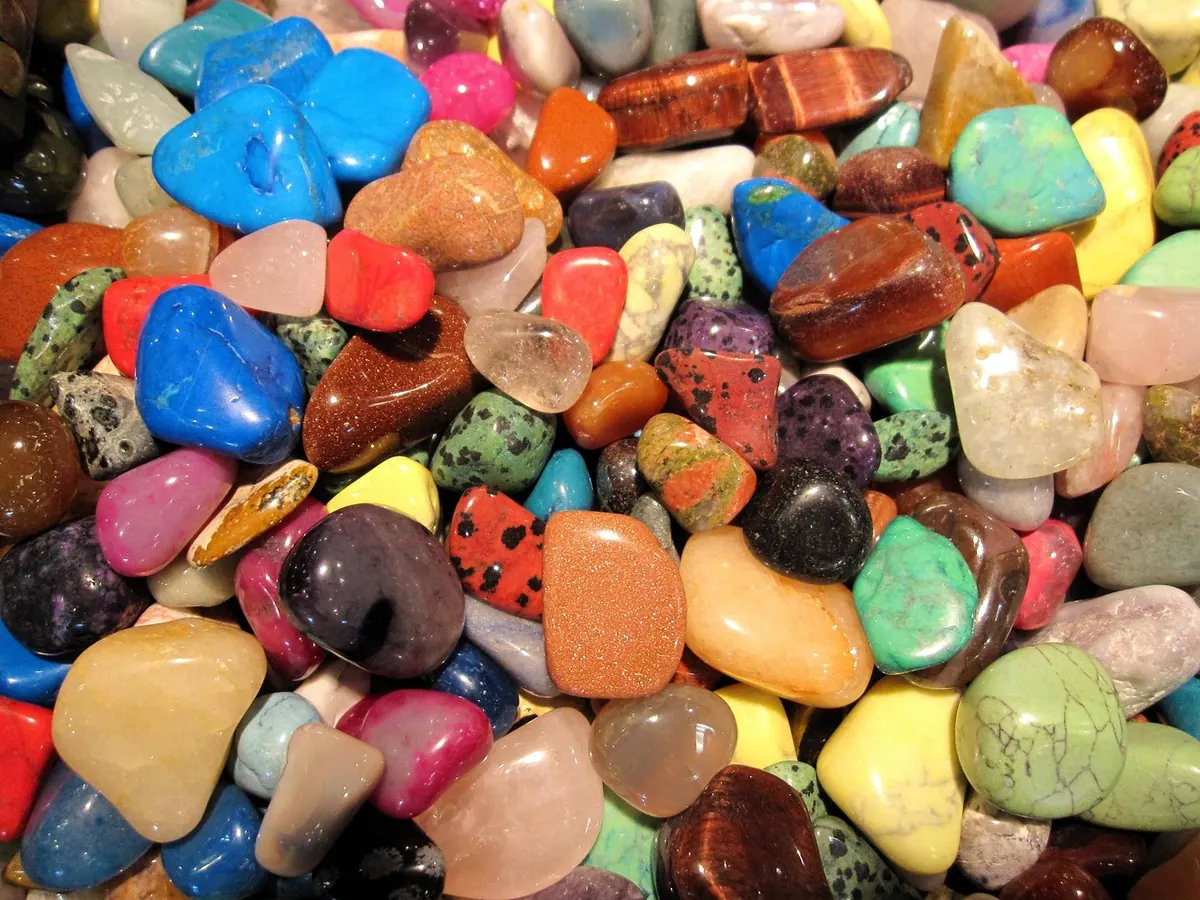
A sapphire is not a colour. It is a mineral — corundum, aluminium oxide, the second-hardest material nature produces in any quantity — and colour is simply the guest that happens to be living inside the crystal. Blue is what most people picture, and it is the most common shade in a jeweller's window. But open a tray of loose stones and you will find ice-white, banana yellow, mint green, violet, deep rose, and a soft peachy pink that has its own name in the trade. Rubies are corundum too, the red ones. Same crystal, different guest.
Three things decide which colour reaches your eye: the trace elements inside the crystal, the geology of the ground where it grew, and whatever happened to it after it was cut from the rock. Understand those three and a bewildering wall of colour becomes a set of reading instructions.
Chemistry first, because colour starts there
Pure corundum is colourless. Colourless sapphire exists, it is real sapphire, and it is the least expensive colour of the family. Colour appears when a handful of foreign atoms — trace elements, measured in parts per million — slip into the crystal as it grows. Those atoms absorb particular wavelengths of light, and whatever is left over is the colour you see.
The pairs and singles worth knowing:
Iron and titanium, together. Neither element alone gives that classic blue. It takes both, working as a pair inside the lattice, to absorb red and yellow light and leave the blue. This is why two sapphires with the same iron content can look entirely different: what matters is how much titanium is sitting nearby.
Chromium. A little gives pink sapphire; more gives ruby. Gemmologists and laboratories have argued for decades about exactly where pink stops and red begins, and the answer often depends on which lab you ask and where the stone was found. If you are buying at that boundary, buy the colour you like and read the report rather than trusting the label.
Iron on its own. Pale yellow, greenish yellow, sometimes a soft green. The iron-bearing sapphires are often the ones that look slightly muted or steely, because iron also dampens the fluorescence that makes other sapphires glow.
Vanadium. Violet and purple stones, plus the intriguing colour-change sapphires: greyish blue in daylight, plum or purple under warm indoor light. These are not two different stones. They are one stone reacting to two different light sources.
A colour-by-colour map
If you prefer the short version, keep this list in mind when you are looking at a tray:
- Blue — iron plus titanium. Ranges from pale sky to deep velvet navy.
- Pink and red — chromium. Pink sapphire and ruby sit on the same sliding scale.
- Yellow — iron, sometimes with colour centres created by natural radiation in the ground.
- Green — usually iron in a different state, or a mix of blue and yellow influences in one crystal.
- Violet and purple — vanadium, often with iron alongside.
- Padparadscha — the pink-orange stones, traditionally from Sri Lanka, coloured by a delicate blend of chromium and iron.
- Colourless — no meaningful trace elements at all.
Where it grew leaves fingerprints too
Two sapphires can carry identical trace elements and still look nothing alike, because they grew in different kitchens. Corundum forms in a few distinct geological settings, and each one imprints its own character on the rough.
Stones from marble-hosted deposits — Kashmir, Myanmar, Vietnam, parts of Madagascar — grow in a relatively iron-poor environment. That low iron is part of why the finest of them have that soft, sleepy, almost velvety blue, and why they often carry fine rutile needles known as silk. Those needles scatter light gently through the stone instead of blocking it.
Basalt-related deposits, including those in Australia, Ethiopia and parts of Montana, tend to produce corundum with more iron in it. The blues are often darker, greener or more metallic, and the crystals are frequently small. Montana also gives lovely pastel pinks and greens that look nothing like the Asian classics.
Sri Lanka deserves its own line. The gravels around Ratnapura have produced almost every colour sapphire has to offer, often in the same pit, which is one reason Sri Lankan stones turn up in so many different kinds of jewellery.
None of this makes one origin better than another. It makes them different, the way a Burgundy and a Barossa Shiraz are different. Origin matters most when a stone is exceptional; for everything else, your eye should decide.
Treatment: what happens before the stone reaches the tray
This is the part beginners usually miss, and it explains a lot of the price spread on the shelf.
Heating
Most sapphires on the market have been heated to a few hundred or a few thousand degrees. Heating can dissolve rutile silk to clarify a cloudy stone, deepen a washed-out blue, or lighten one that is too dark. The result is permanent, stable and accepted across the trade — a heated blue sapphire is a perfectly good purchase. It is simply worth less than an unheated stone of the same colour, because unheated colour is rarer. Any reputable seller should tell you which you are looking at.
Diffusion
In diffusion treatment, the stone is heated with colouring elements such as beryllium or titanium, which soak into the outer layer and change the colour — turning pale or near-colourless rough into yellow, orange or blue. The colour is only skin-deep, so it can be affected by repolishing or by a knock at the girdle. It must be disclosed, and detecting it usually takes a laboratory.
Fracture filling
Heavily cracked, low-grade material is sometimes filled with glass or resin to improve clarity. Filled sapphires can be damaged by heat, by acids, and by the torch a jeweller uses during a repair. They are cheap for a reason. If a sapphire looks surprisingly clean for its price, ask the question.
Treatment is not a dirty word. Undisclosed treatment is. A modest, honestly described heated sapphire can be the best value in the shop.
What to ask before you buy
- Is it natural or lab-grown? Synthetic sapphire is real corundum, made in a furnace, and it is sold with full disclosure by honest dealers.
- Has it been treated, and how? Get the answer in writing on the invoice.
- Is there a report, and from which lab? For anything beyond inexpensive, look for a report from a recognised independent laboratory, and check that the report number matches the stone.
- Can I see it in daylight? Showroom lighting flatters everything. Take the stone to a window, then look at it under a warm bulb. Colour-change stones and overly dark blues both reveal themselves in that walk across the room.
- What is the return policy? A short, no-questions return window protects you while you think it over.
Choosing your first coloured sapphire
Start with the colour family you actually want to wear, not the one that sounds most impressive. Then accept the trade-off every buyer meets: you can have size, top colour, or no treatment, but rarely all three at a comfortable price. Pick two.
Try stones against your skin in daylight. A cool grey-blue and a warm peach flatter very different complexions, and no photograph settles that for you. If you are spending a meaningful amount, insist on a report from a recognised laboratory and, for a serious purchase, consider paying a qualified gemmologist for independent advice before you commit. A small fee now is cheaper than an expensive lesson later.
And keep the chemistry in mind. The colour in front of you is not a flaw or a variation on some ideal blue. It is the direct result of what was in the ground when that crystal formed — which is, honestly, the most interesting thing about it.
Photo: cabotots / Pixabay