
What Is Sunset Jewelry? Understanding Warm-Toned Gemstone Pieces
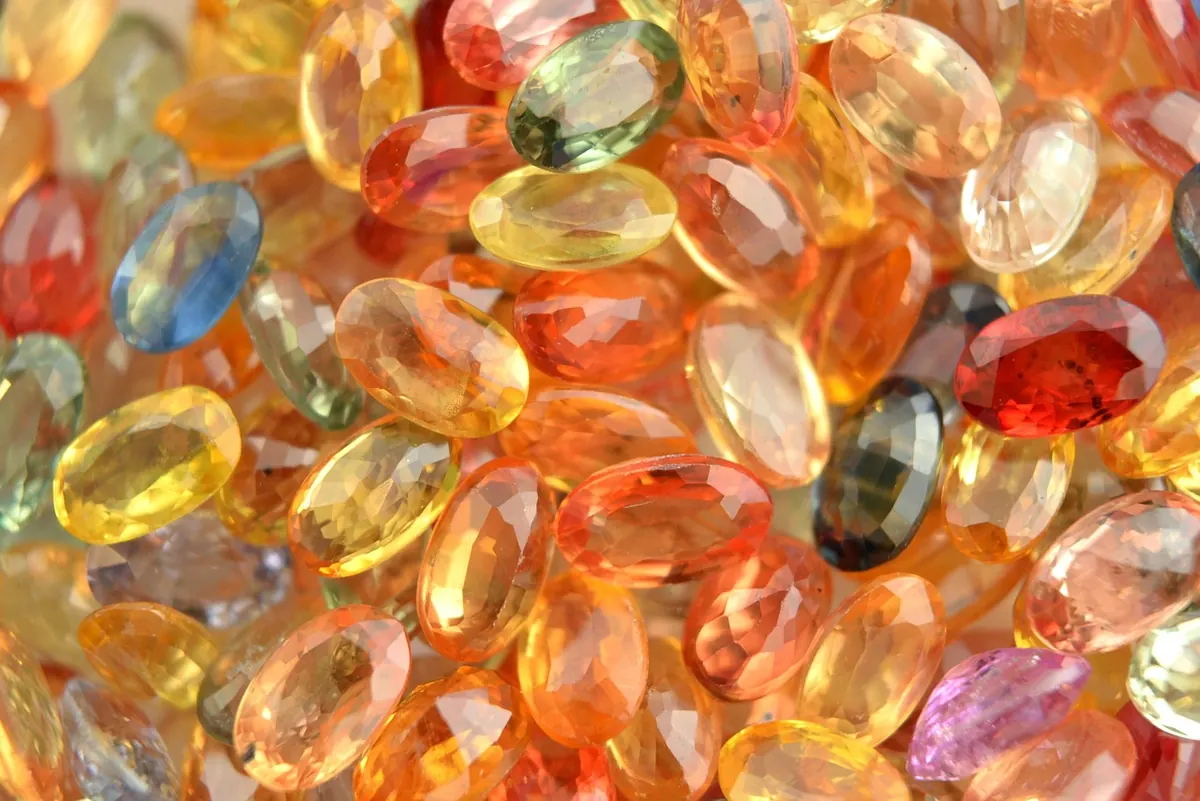
Sunset jewelry is the loose family of pieces built around warm, low-light colours: peach, apricot, coral, salmon, orange, and the softer pinks that lean toward red instead of blue. It is not an official category and there is no rulebook — it is a description jewellers and collectors reach for because it says in one word what “pinkish-orange corundum” cannot. The stones that do most of the work are specific: sapphires in those shades, padparadscha above all, and sunstone with its metallic shimmer. Here is how the palette actually behaves, and how to set it in metal that flatters it rather than fights it.
What Puts a Stone in the Sunset Family
Three things decide it: hue, tone, and the way the material handles light.
Hue comes first. The colour has to sit on the warm side of pink, where orange is close by. A stone that reads clearly red is a ruby; one that reads clearly yellow is a yellow sapphire. The sunset zone is the narrow band in between, where pink and orange overlap and neither quite wins. That is why the same supplier can call two stones “peach” and “salmon” and be right both times.
Tone and saturation matter just as much. Too pale, and a stone looks washed out once it is surrounded by metal. Too dark, and the warmth disappears under office lighting, leaving something that reads almost brown. The most reliable pieces sit in the light-to-medium range with moderate saturation — vivid enough to hold colour indoors, soft enough to glow in the evening.
Then there is behaviour. A sapphire returns clean, glassy colour and looks much the same from every angle. Sunstone is the opposite: it needs movement and light to show its shimmer, and it can look flat in a photograph. Neither is better. They simply belong to different moods, and knowing which you want saves a lot of returns.
The Stones, One by One
Peach and apricot sapphire
The easiest entry point. These are corundum, so they rank nine on the Mohs scale and shrug off daily wear. Most are heat-treated, which is standard and accepted; unheated stones exist and cost more. Look for even colour across the stone rather than a pale centre with saturated edges.
Coral and salmon sapphire
A step warmer and slightly more saturated. Coral sapphires can drift toward orange in daylight and back toward pink indoors, which is part of the appeal. In a ring, choose a setting that protects the girdle if you wear it constantly.
Orange sapphire
Pure orange is rarer than it looks. Some of the brightest stones on the market owe their colour to lattice diffusion treatments, which must be disclosed. If saturation seems almost fluorescent, ask directly what was done to the stone and get it in writing.
Pink sapphire
The coolest note in the palette, and the one that bridges most easily to a conventional jewelry wardrobe. A pink sapphire with a hint of orange reads far warmer than a bubblegum pink one, so compare a few side by side before deciding.
Padparadscha
The benchmark of the whole category: a pink-orange sapphire whose colour has been compared to a lotus blossom at sunset. The definition is genuinely debated — how much pink, how much orange, how light is too light — which is exactly why a report from a recognised gem laboratory matters here more than anywhere else in this palette. Buy the report with the stone, not after it.
Sunstone
A feldspar, not a corundum, and much softer at around six to six and a half on the Mohs scale. Oregon material shows a coppery glitter from tiny inclusions; other sources show a softer sheen. It is the most affordable way into sunset colours and the most fragile.
Choosing the Metal
Metal changes the colour you perceive. A white setting makes pink look rosier and cleaner; a warm setting pulls the same stone toward peach. Try the stone against two metals in daylight before you commit — the difference is rarely subtle.
- Yellow gold. The natural partner for apricot, orange and honey-toned stones. Eighteen-karat is richer in colour; fourteen-karat is harder wearing and slightly paler, which can actually suit very light peach stones better.
- Rose gold. Copper in the alloy gives it the pink cast that flatters coral and salmon sapphires and sunstone. Higher-karat rose gold is subtler; lower-karat tends to be pinker.
- White gold. Rhodium-plated and cool, ideal for pink sapphire and for anyone who wants the stone to be the only warm note in the room. Many white alloys contain nickel, so ask about palladium-white if your skin has reacted before.
- Platinum. Neutral, dense, and heavy in the hand. It gives a soft grey contrast that makes orange stones look brighter than yellow gold does.
- Sterling silver. The budget route, and perfectly good for earrings and pendants. It is softer, so prongs wear faster and need checking more often.
Setting style matters too. Open backs and bezels with cut-down galleries let light reach the pavilion; that is essential for sunstone and helpful for any pale sapphire. A closed backing can make a light peach stone look muddy.
Wearing the Palette Without Looking Costume-y
The trap with warm stones is piling on too many at once. Two or three tones in a single piece is usually enough; a ring with a peach centre and coral sides reads as one colour story, while five shades read as a fruit bowl.
Anchor the warmth with something neutral. Small diamonds, white sapphires, pearls or a single brown zircon give the eye somewhere to rest. If you are layering necklaces, let one piece be saturated and keep the others pale — a strong orange pendant next to a whisper-pale peach chain works; two strong pieces compete.
Clothing does a lot of the lifting. Sunset stones look particularly good against cream, olive, denim, rust and chocolate brown. They can turn muddy against acid yellow or bright scarlet. Sunstone is forgiving in daylight and casual settings; sapphire carries an evening much more convincingly.
Buying and Care Notes
- Ask what has been done to the stone — heat, diffusion, filling — and get the answer on the invoice.
- For padparadscha, insist on an independent laboratory report and check that the colour call matches the report, not just the tag.
- View the stone in daylight and under the lighting you actually live with. Shop lights flatter everything.
- Match the setting to the wear: bezels for everyday rings, prongs for earrings and pendants that see less knocks.
- Confirm the return window, and arrange an independent appraisal if you plan to insure the piece.
Cleaning differs by stone. Sapphires are tough: warm water, mild soap, a soft brush, and a rinse are fine, though it is worth keeping chlorine and harsh chemicals away from the metal. Sunstone is not — it has two directions of cleavage and dislikes steam cleaners, ultrasonic tanks, and sudden temperature changes. Wash it in lukewarm water, dry it gently, and store it in its own pouch rather than loose in a box with harder stones.
Where to Start
Pick the shade you would wear with the three outfits you reach for most, then look at that colour in both yellow and white metal before spending anything. If you are unsure, a peach or coral sapphire in a simple bezel is the most versatile first purchase: hard enough for daily wear, warm without being loud, and easy to layer later. Build outward from there — a second piece in a deeper tone, then earrings, then something in sunstone for the days you want shimmer instead of gloss.
Photo: 11754907 / Pixabay