
Beginner's Guide to Sapphire Care: Cleaning, Storing and Avoiding Damage
A sapphire can handle everyday life better than many gems, which is why it ends up in rings that are worn constantly. It is also why people sometimes stop paying attention. A hardness of 9 on the Mohs scale makes sapphire resistant to most scratches, but hardness is not the same as invincibility. A sharp knock against a tile counter can chip a facet edge. Lotion, soap and hand cream can dull the stone until it looks cloudy. Prongs bend and wear thin without announcing it. The good news is that sapphire care is not complicated. A few reliable habits, repeated often, keep the stone bright and the setting secure.
What sapphire care really means
Sapphire is corundum, and its hardness means it will not scratch from ordinary contact with keys, coins or most other gemstones. Diamond and a few harder materials can still scratch it, and another sapphire can scratch a sapphire. More importantly, hardness does not protect against impact. A sapphire dropped on a hard floor or struck against a door frame can chip or fracture, especially at the girdle or facet edges.
Treatment history matters too. Many sapphires are heat-treated, which is a stable and widely accepted process. Some stones are fracture-filled or dyed, and those need gentler handling. If you do not know what your sapphire has been through, ask a jeweler before using any mechanical cleaner. When in doubt, clean with lukewarm water and mild soap. That method is safe for nearly every sapphire.
The step-by-step cleaning routine
Clean sapphires regularly, not only when they look dull. Skin oils, soap residue and dust collect under the stone and around the prongs, and that film is what makes a fine sapphire look flat. A quick clean every few weeks is usually enough for a ring worn daily; a pendant or earrings can go longer.
What you need
- A small bowl of lukewarm water
- A drop or two of mild dish soap without moisturizers or abrasives
- A soft baby toothbrush or a jeweler’s brush
- A fine sieve or a clean bowl for rinsing
- A lint-free cloth, such as a microfiber jewelry cloth
How to clean
- Close the sink drain or work over a bowl. Sapphires are heavy enough to slip from wet fingers, and a loose stone in a drain is a expensive problem.
- Fill the bowl with lukewarm water and add a small drop of mild soap. Hot water is unnecessary and can be risky for some settings and treatments.
- Let the piece soak for 10 to 15 minutes. This softens the film around the prongs and under the stone.
- Brush gently with the soft brush. Work around the stone, along the prongs and underneath the setting where grime hides. Do not scrub hard against the stone or bend the prongs with the brush.
- Rinse in clean lukewarm water, using a sieve if you are cleaning a ring. A gentle stream is better than a strong blast.
- Pat dry with a lint-free cloth, then let the piece air dry completely before storing it. A soft cloth brings back the surface shine without leaving lint.
For a quick refresh between deeper cleans, wipe the stone with a dry soft cloth after removing the jewelry. That simple step removes skin oils before they set into a film.
What not to use
Some cleaning advice travels well; some does not. Avoid toothpaste, baking soda pastes and abrasive pads. They can leave fine marks on the metal and, over time, dull the surface of the stone. Skip bleach, chlorine, ammonia and strong household cleaners, which can damage setting alloys and are unnecessary for sapphire. Vinegar and lemon juice are not good jewelry cleaners either; they add acid without solving the real problem, which is usually oily residue.
- Ultrasonic and steam cleaners: usually fine for untreated or heat-treated sapphire in good condition, but skip them if the stone is fracture-filled, dyed, antique, or set with adhesive. If you are unsure, use the bowl method.
- Hot water: avoid it. Lukewarm water cleans just as well and is kinder to settings.
- Shared cleaning jars: do not drop a sapphire into a jar with other jewelry. A diamond or another sapphire can scratch it.
Storage that prevents scratches and loose stones
Most sapphire damage does not happen while the jewelry is being worn. It happens in a drawer, a travel bag or a jewelry box where pieces knock together. Sapphire can scratch gold, softer gemstones and other sapphires, and the metal can scratch the sapphire’s polished surface in return. Store each piece separately.
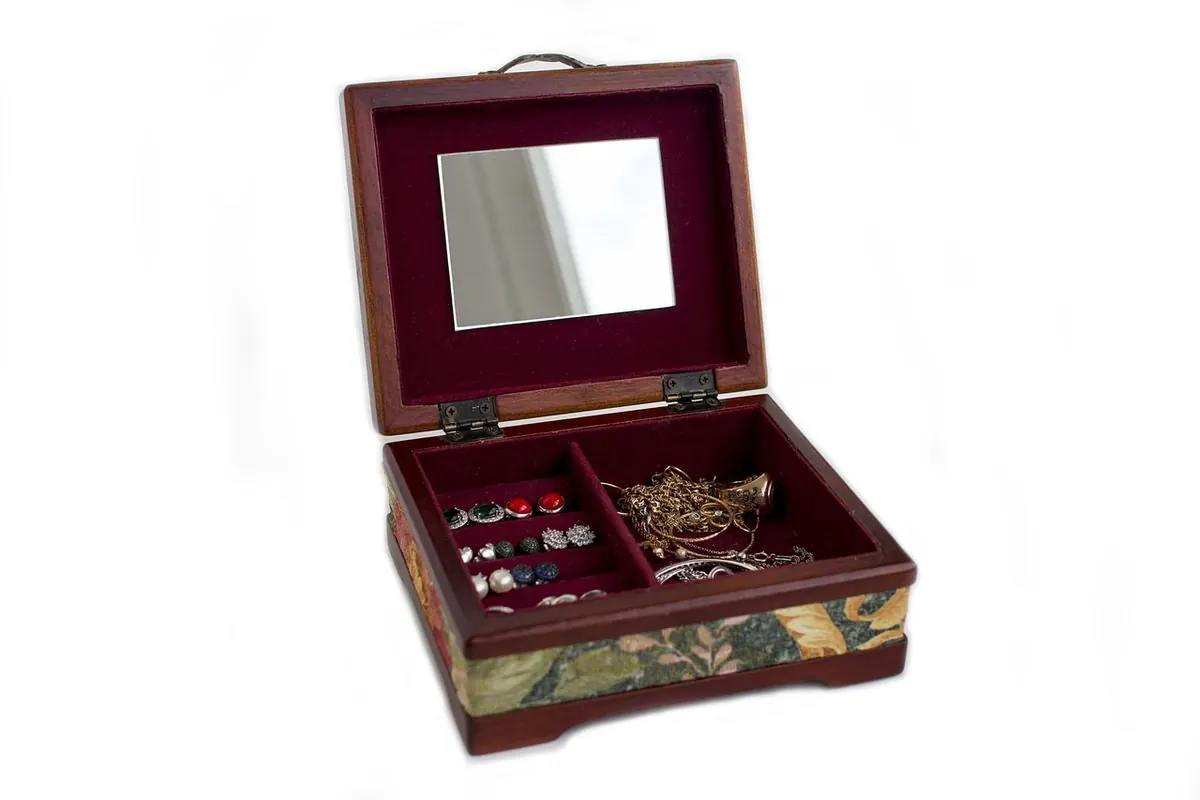
A fabric-lined box with individual compartments works well. So does a soft pouch for each piece. Avoid tossing a sapphire ring into a bowl with diamond studs or a chain; the chain can catch a prong, and the diamond can mark the sapphire. Keep pendants from tangling by fastening the clasp and laying them flat. For travel, use a padded jewelry case and keep the sapphire in its own section. Do not store fine jewelry loose in a toiletry bag where it can be crushed by bottles or zipper pulls.
Dry storage matters as well. Put jewelry away only after it is completely dry. Trapping moisture in a closed box is not good for settings or for the surface of the stone.
Daily wear habits that protect the setting
Prongs are the weak point of most sapphire rings. The stone may be tough, but the metal holding it is thin by design. Put jewelry on last, after makeup, lotion, perfume and hairspray have dried. Take it off first when you get home. That one habit reduces the film that makes stones cloudy and limits exposure to products that leave residue.
Remove sapphire jewelry before gym sessions, gardening, house cleaning, swimming and showering. Chlorine is not kind to settings, and lifting weights or gripping tools puts pressure on prongs. A ring worn during yard work can catch on a branch or strike a stone edge. If you are doing rough work, leave the ring in its pouch. Also avoid wearing a sapphire ring while moving furniture or carrying heavy boxes; a single hard knock can loosen a stone even if the sapphire itself looks perfect.
When the stone looks cloudy or the setting feels loose
Cloudiness is usually surface film, not a flaw in the sapphire. Clean the piece with the bowl method and look at it under bright light. If the stone still looks hazy from the underside, grime may be trapped beneath the setting; a jeweler can clean it properly. Do not dig around the prongs with a pin or needle.
If you notice a stone that moves, a prong that is bent, worn flat or snagged on clothing, stop wearing the piece. Do not press the stone back into place or try to tighten prongs at home. Place the jewelry in a container and take it to a jeweler. A loose sapphire can be secured with a minor repair; a lost sapphire is a much bigger job. Have frequently worn pieces inspected every six to twelve months, and ask for a prong check during the visit.
A simple care rhythm
Wipe sapphire jewelry after each wear, wash it gently every few weeks, and check the setting monthly under a bright lamp. Store each piece separately, and keep the jewelry away from harsh cleaners and rough work. Once a year, or twice a year for a daily-wear ring, let a jeweler inspect the prongs and give the piece a professional clean. That quiet routine does more for a sapphire than any single deep clean.
Photo: cottonbro studio / Pexels