
How to Choose a Sapphire Ring for Everyday Wear
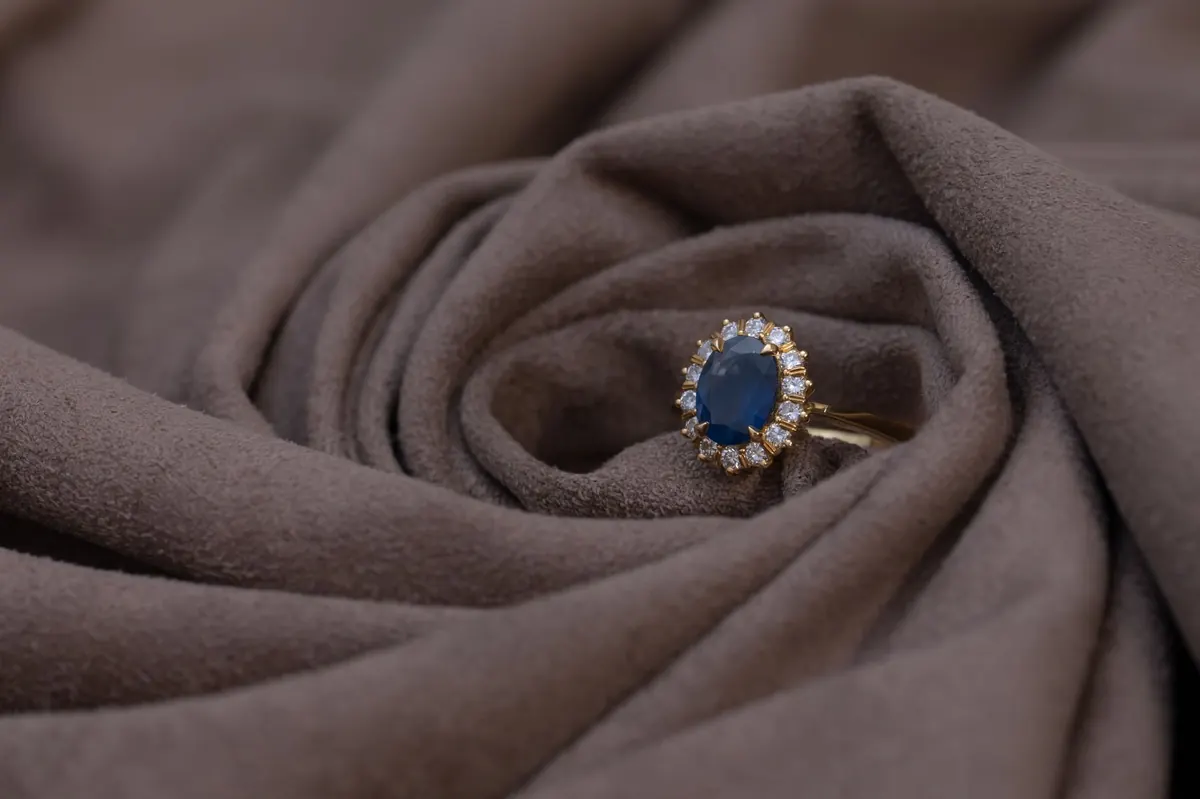
A sapphire ring can take a lot. Sapphire is corundum, the same mineral as ruby, and at 9 on the Mohs hardness scale it is harder than nearly everything your hand meets in a normal week, with diamond the main exception. Hardness, though, only measures resistance to scratching. It says nothing about what happens when the stone is struck at the wrong angle, or whether a tall setting will catch on your coat sleeve every morning. The rings that survive desk work, gym bags and the washing-up bowl are rarely the most elaborate ones. They are the ones whose details were chosen for a real hand in a real life.
Start With the Stone: Size and Shape
Bigger is not automatically better for a ring you never take off. A large sapphire needs a taller setting to hold it, and a taller setting is a lever waiting for a doorframe. If you want presence without height, look at the stone's spread — how wide it appears from above — rather than its carat weight alone. A well-cut stone with a slightly shallower pavilion can face up larger while sitting closer to the finger.
Shape matters just as much. Round and oval sapphires have smooth outlines that slide past fabric and pocket linings. Cushions do too, and they suit a bezel beautifully. Pointed shapes — pear, marquise, and to a lesser degree the corners of a princess cut — put thin material exactly where knocks tend to land, so they need proper prongs at every tip and a little more care. Step cuts such as emerald cuts show every scuff on their broad flat facets, while brilliant cuts scatter light and hide everyday wear more forgivingly.
Ask to see the stone in different light, and ask plainly whether it has been treated. Heating is standard in the trade and stable. Fracture filling and diffusion treatments are also used, and while they are not automatically a reason to walk away, you should know what you are buying and have it stated in writing.
Setting Height: The Detail That Decides How Often You Wear It
A cathedral setting lifts the stone up and away from the finger, which flatters it and lets light in from the sides. On a desk, that same height means the sapphire takes the full force of every keyboard edge and drawer pull. Before you commit, place the ring on your hand and do three ordinary things: type a paragraph, put your hand into a trouser pocket, and reach into a bag for keys. If the stone snags or you find yourself lifting your hand to protect it, you have your answer.
A rough test helps. Compare the ring's total height above the finger with a coin or a ruler. Under about six millimetres and the ring will mostly disappear into your day. Much above that and you will be conscious of it, which is not always bad — some people like a ring they can feel — but it should be a choice, not a surprise.
Which Setting Type Actually Protects the Stone
Setting style is where protection is won or lost, and it matters more than the difference between one sapphire and another of similar quality.
- Full bezel. A continuous rim of metal around the girdle. The most protective option by a distance, and the best choice if your hands are busy. It covers a sliver of the stone's edge, so pick a sapphire whose colour reaches right to the rim.
- Half bezel or channel-set sides. A good compromise: the exposed edge is the one less likely to be knocked.
- Four or six prongs. Classic and open. Six prongs hold a round stone more evenly; four prongs show more of the sapphire. What matters is prong thickness and finish — thin, sharp-tipped claws catch on knitwear and wear through faster.
- Flush or gypsy setting. The stone sits level with the metal, almost like a dome. Extremely practical, and lovely in a wide band.
- Halo. Beautiful, but every small stone and every edge is another thing to catch, loosen or lose. Consider a halo for occasional wear rather than for the gym.
Metal Choice: Match It to Your Habits, Not Only Your Palette
Fourteen-karat gold is harder and more scratch-resistant than eighteen-karat, simply because it contains less pure gold. Eighteen-karat has a richer colour and a softer glow, and it will show fine scratches sooner — which on a brushed or satin finish barely registers, but on high polish becomes visible within months. Neither is the wrong answer; it depends on whether you would rather have depth of colour or a surface that stays crisp.
Platinum is dense and holds prongs exceptionally well, and it wears by displacing rather than by losing metal, developing a soft grey patina that some people love and others polish away. White gold is usually rhodium-plated for brightness, and that plating thins with wear, so budget for re-plating every year or two. Yellow and rose gold warm up a blue sapphire in a way white metal cannot; white metal makes a cool, icy blue look colder still.
If you have reacted to inexpensive jewellery before, mention it. Nickel sensitivity is common, and a jeweller can tell you what is in the alloy or suggest a nickel-free option. For any persistent skin reaction, speak to a doctor rather than guessing.
Details That Quietly Decide Whether It Lasts
Look past the stone for a moment. A band under about 1.8mm thick feels elegant in the hand and can distort out of round within a year or two of daily wear; something nearer 2mm is a sensible floor for a ring that stays on. Check the girdle — the outer edge of the sapphire — and avoid stones described as having a very thin girdle, which chip more readily. Ask whether the sapphire is eye-clean, and whether any inclusions reach the surface.
Think about sizing, too. Most rings can be adjusted a little, but full eternity bands and heavily patterned shoulders often cannot, or cannot without visible marks. If your finger size fluctuates with the seasons, a plain band with a protected setting gives you room to move.
Two Minutes of Care, Once a Week
Take the ring off for the gym, for washing dishes, for gardening and for swimming — chlorine and abrasive cleaners are unkind to metal, and wet, soapy hands are how rings end up in the trap. Clean it with warm water, a drop of mild washing-up liquid and a soft brush, then dry it on a cloth rather than a paper towel. Store it in its own pouch, since a sapphire can scratch gold and other sapphires. Once a year, have the prongs checked; a loose claw is cheap to tighten and expensive to ignore.
A Short Checklist Before You Commit
- Try the ring on and type, reach into a pocket, and lift a bag. Note any snagging.
- Check the total height above your finger and confirm you are comfortable with it.
- Confirm the setting type and whether the girdle is protected or exposed.
- Ask about treatment, inclusions and girdle thickness, and get it in writing.
- Check band thickness and ask whether the ring can be resized later.
- Match the metal to your skin, your colour preferences and how often you will polish.
Choose a sapphire ring the way you would choose a good pair of shoes: the colour draws you in, but the fit and the construction are what make you reach for it every morning. Get those right and the ring becomes part of your hand rather than a possession you keep meaning to wear.
Photo: Arne Bogaerts / Pexels